Oct 2024 – Present
Web3modules
UX/UI Designer, Project Manager
I design products end to end, manage the front-end and back-end teams and run usability sessions with live users.

I design products end-to-end, from research and concept to shipped UI. With a PM background, I also keep teams and processes on track so releases ship on time.
❖ FocusWeb3FintechAI+ iGaming
Experience
Product teams and outsourcing studios: fintech, Web3, AI and sales tools.
Oct 2024 – Present
UX/UI Designer, Project Manager
I design products end to end, manage the front-end and back-end teams and run usability sessions with live users.
Jul 2023 – Present
UX/UI Designer, Project Manager
I run the full design cycle with usability testing and manage dev teams on every project, design teams on selected ones.
Nov 2021 – Nov 2022
Design Lead, UX/UI Designer
I led features from concept to release, ran Design QA (checking the build against the design) and set up team workflows in Notion.
Feb 2021 – Oct 2021
In-house Sales Director
Before design: I built the sales process in Miro and AmoCRM and set up KPIs and sales dashboards in Metabase.
Projects
 Open project
 Open project
 Open project
 Open project
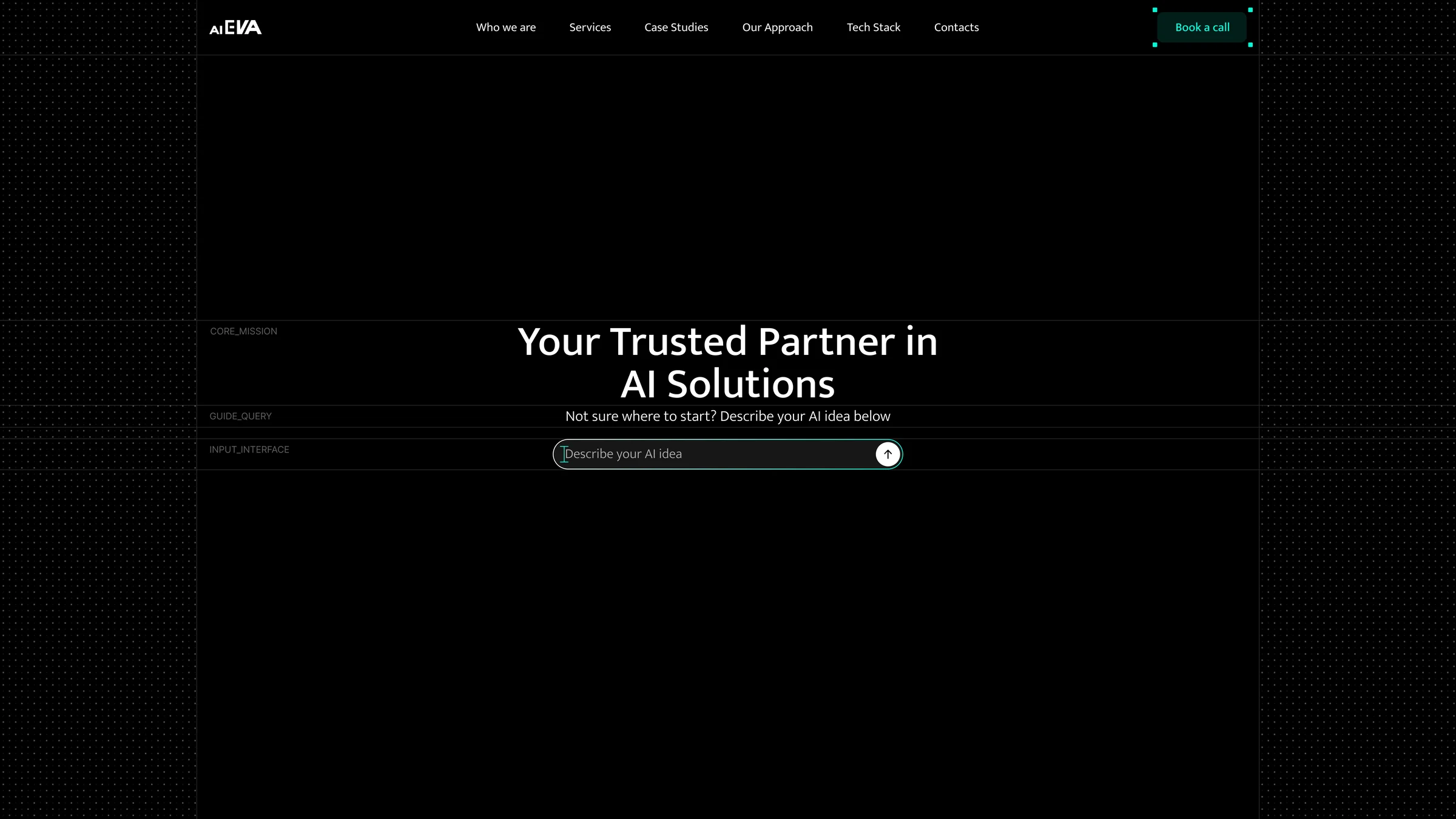
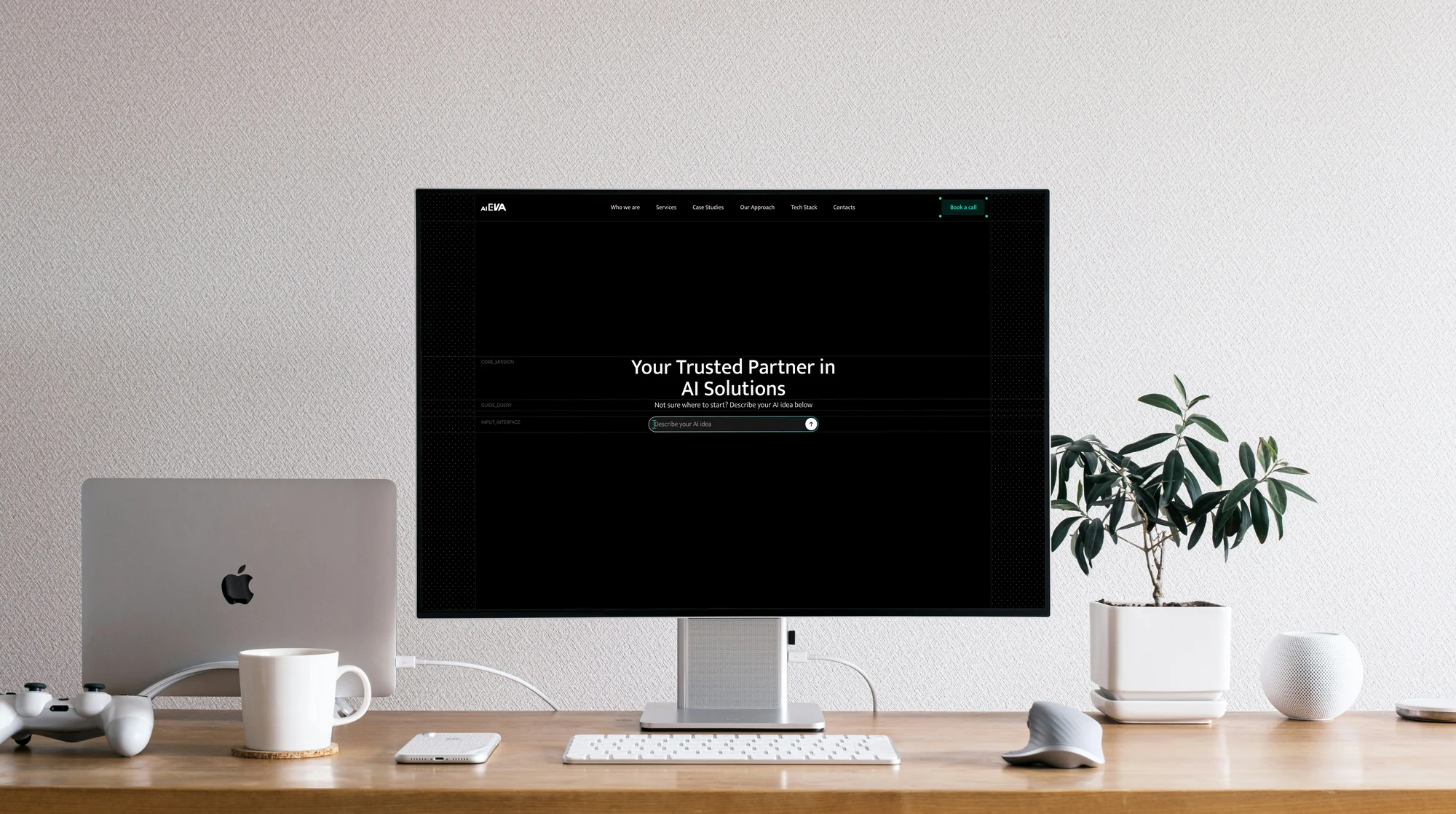
AIEVA is an outsourcing company that builds AI copilots, workflow automation, web app MVPs and AI integrations.
The landing page had to explain four services clearly and turn visitors into project requests.
I built everything from scratch: research, logo and identity, design tokens and a design system. The request form became an AI chat built into the page.
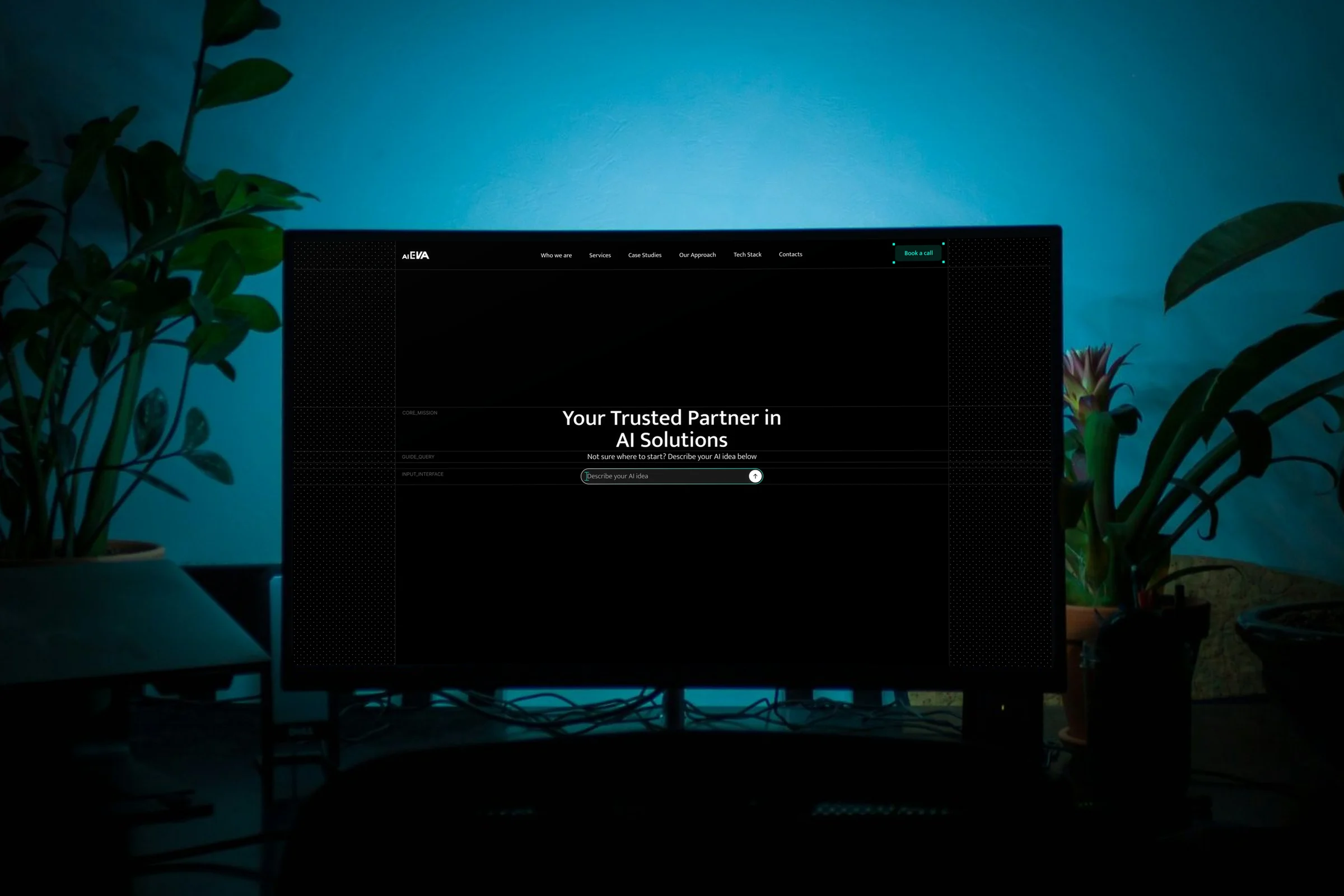
Competitor analysis, then the logo and visual identity.
Tokens for color, type and spacing; reusable components built on them.
Services, the technologies AIEVA works with, its process and an AI chat for project requests.
A chat built into the page layout instead of a floating widget, on desktop and mobile. Quick options cover common requests; free input covers the rest.

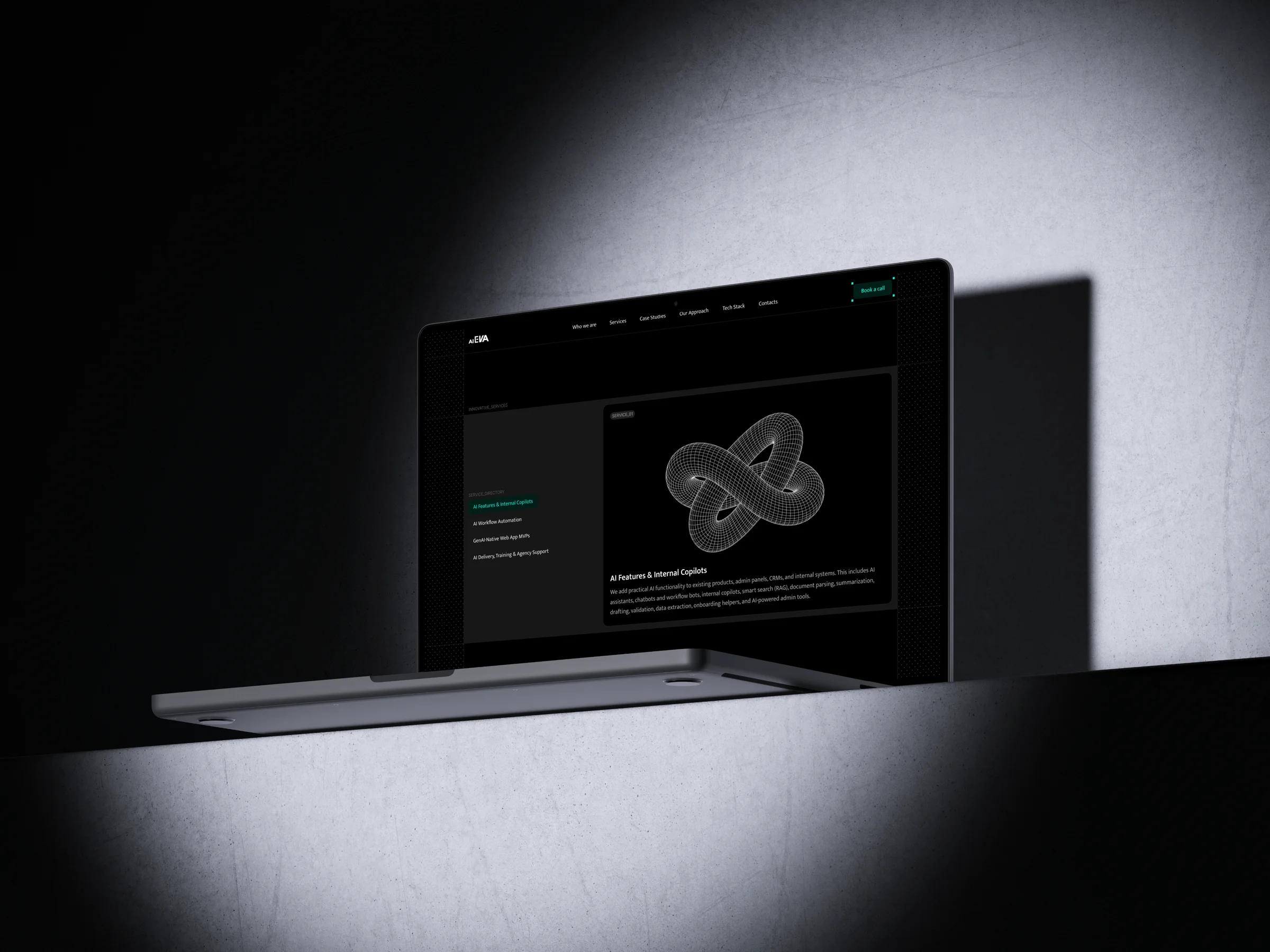
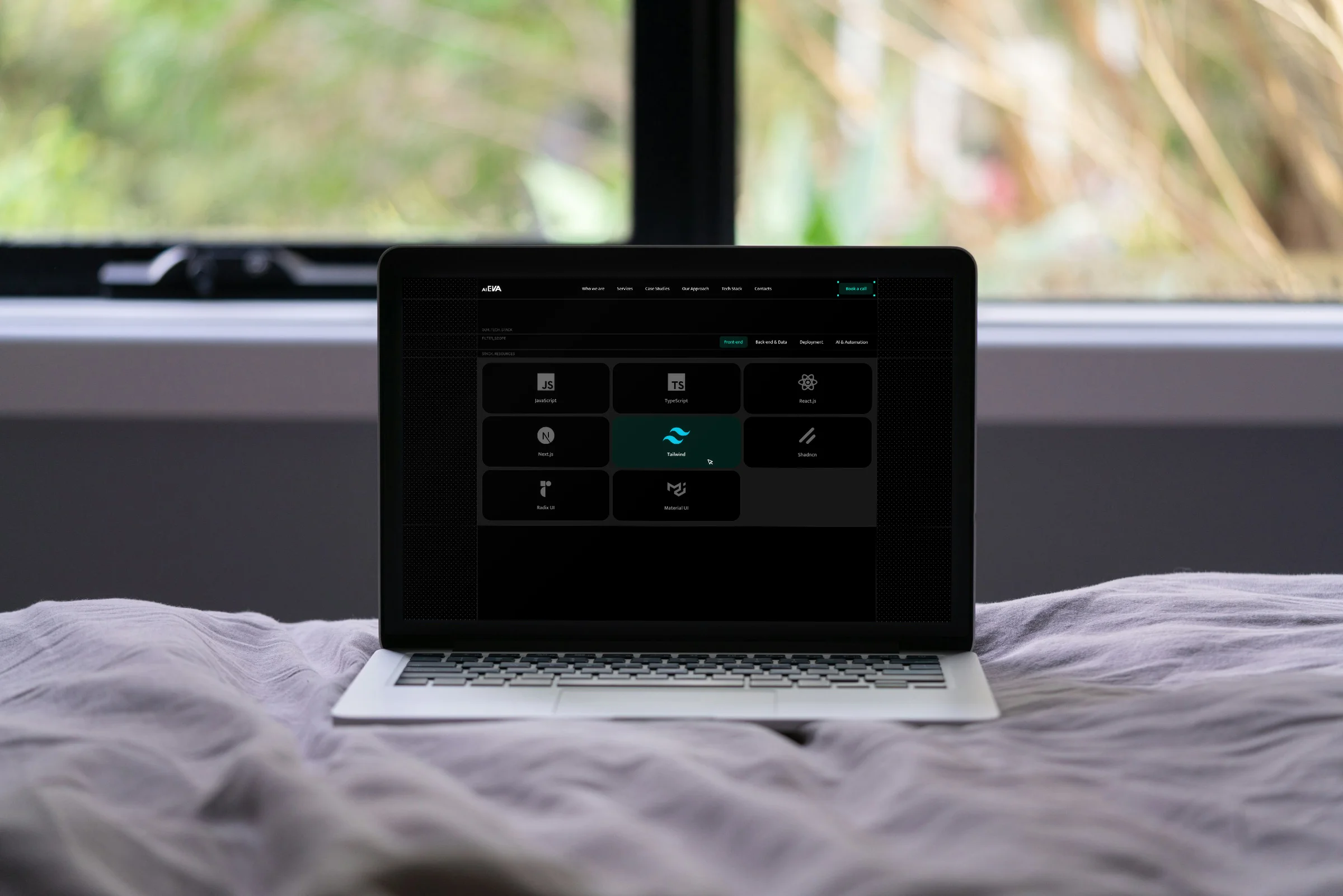
Four services in one directory, each with its own detail card. Technologies grouped by scope: front-end, back-end and data, deployment, AI and automation.
The page where AIEVA presents work delivered for its clients. The example is a GenAI assistant built into a US hospitality marketplace.
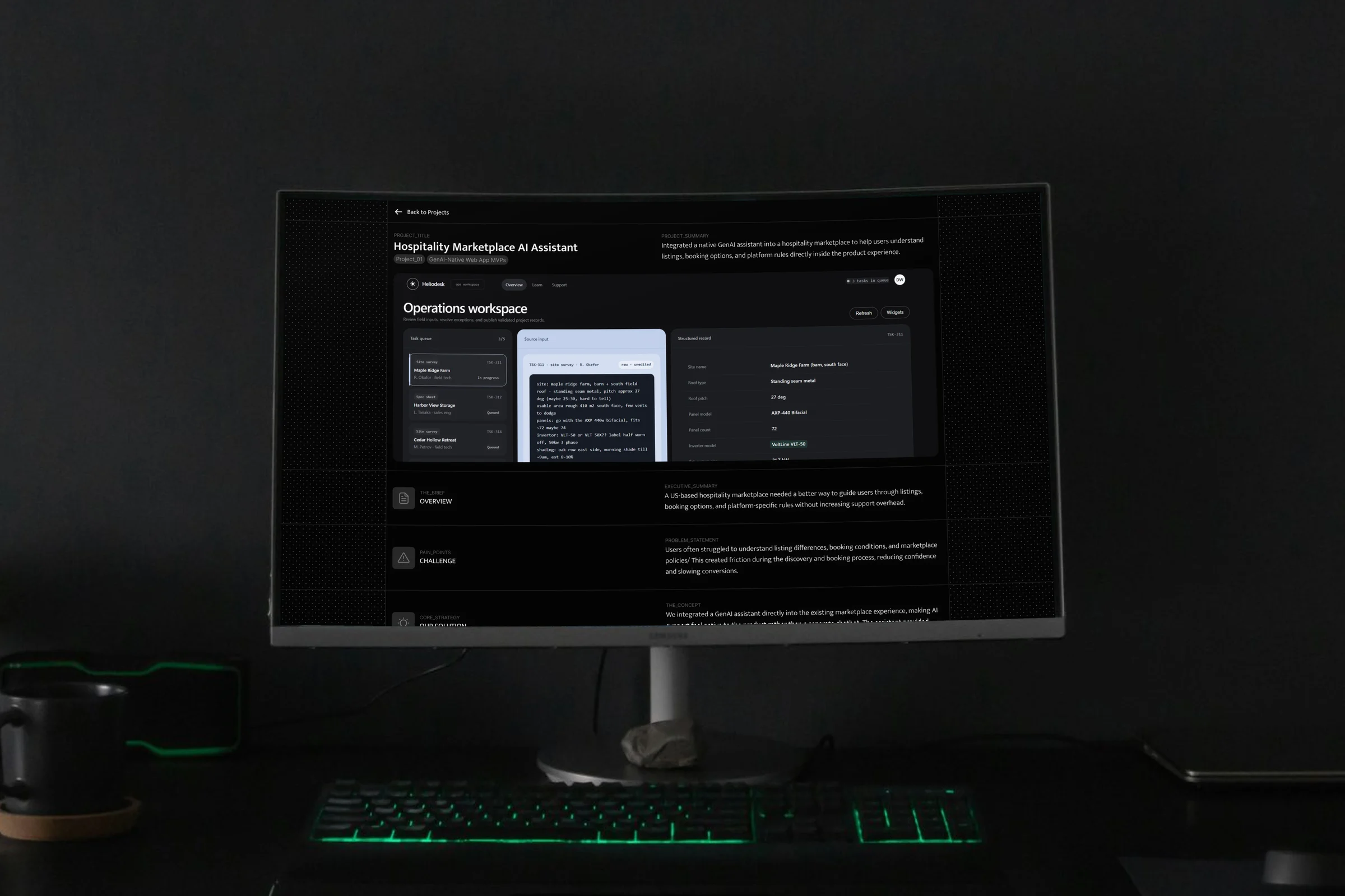
Title, service tags and a one-line summary of the delivered work.
A clickable demo of the client’s product that visitors can try live.
Overview, challenge, solution, technical approach, outcome.
Links to the previous and next client project.
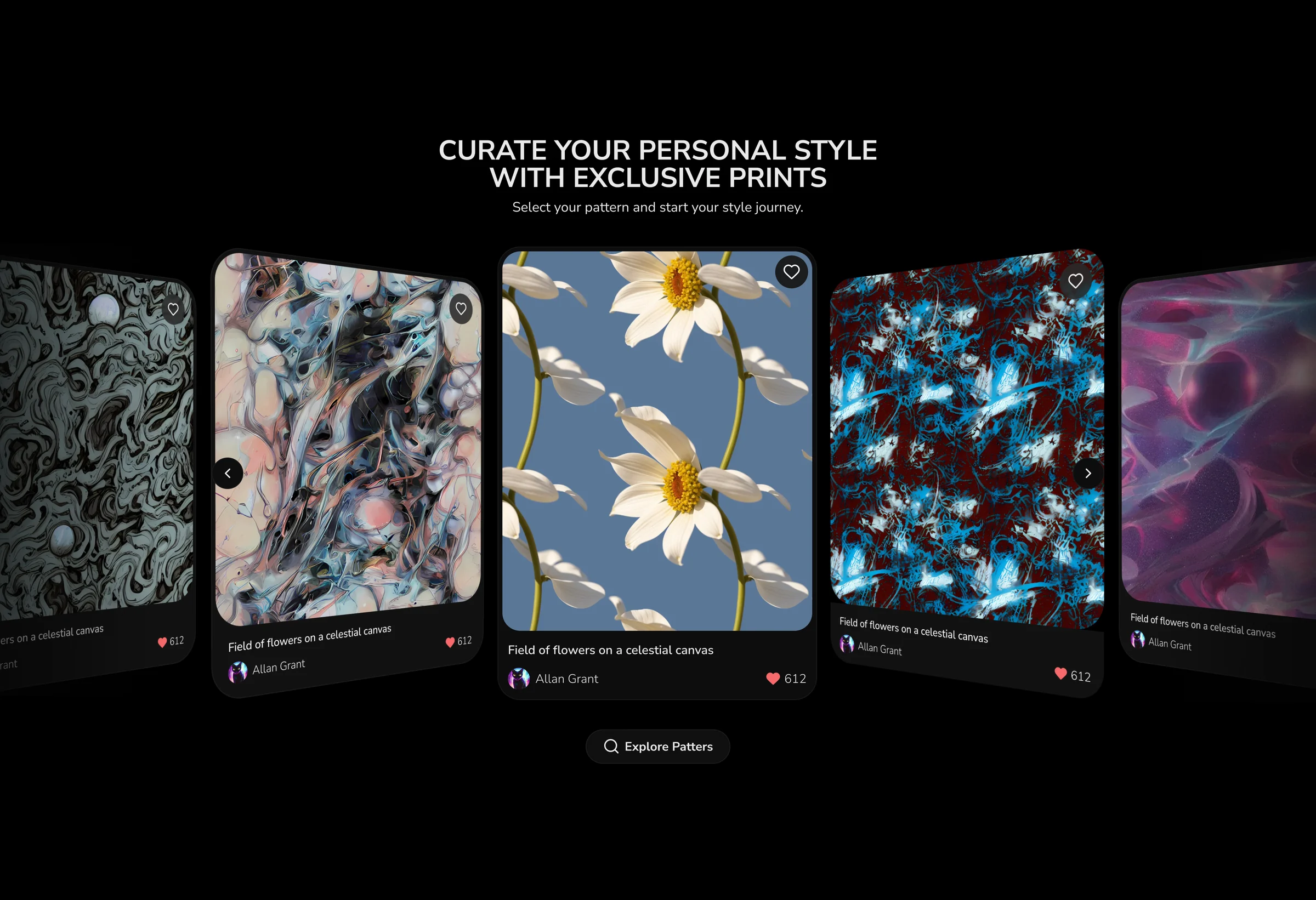
MindPrint sells clothing with AI-generated prints: pick a pattern or generate one, then put it on one of 42 garment types.
My task was to turn a website-builder store into a brand of its own and design the new site from scratch.
A new identity, a component system and a dark store built so the prints, not the template, carry the brand.

A confident voice built on short lines like “Wear your own designs.”
Product and pattern cards, buttons, navigation and forms, so every page scales the same way.
Dark theme so prints stand out, large fashion photos, minimal type and clean grids.
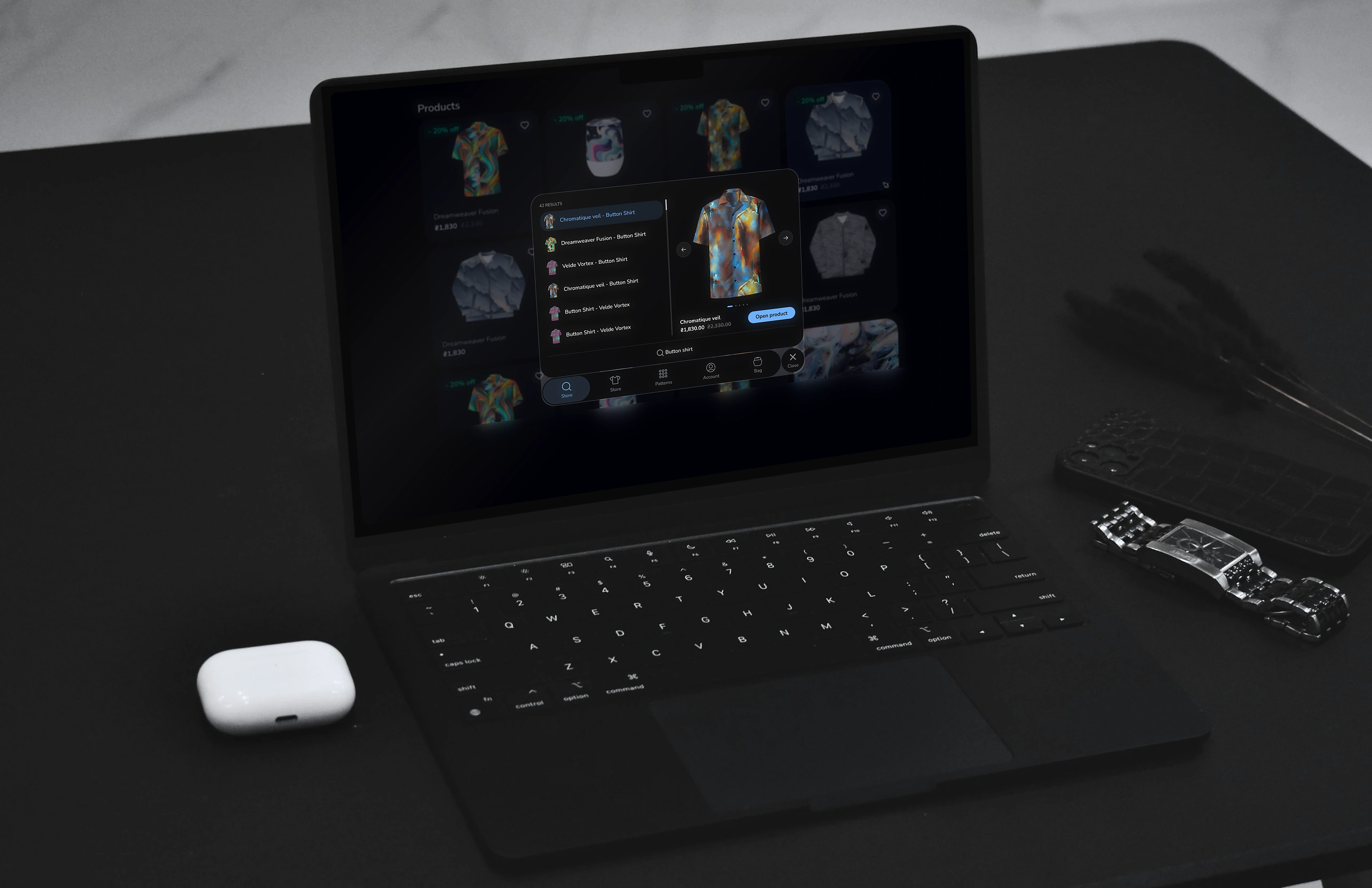
Product search is built into the navbar, next to the bag, so every key action is one step away from any page.
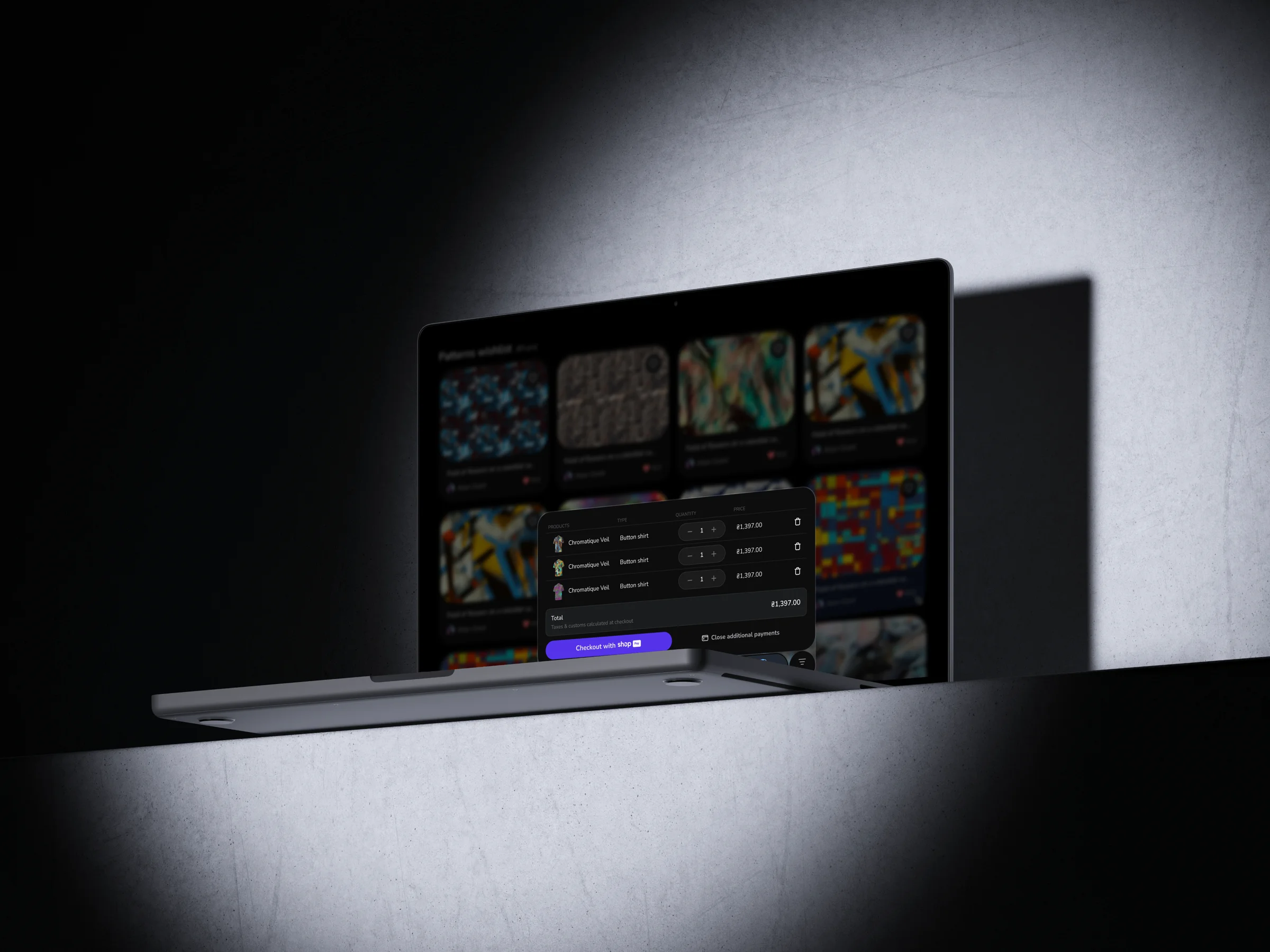
The bag opens from the navbar as a panel: the shopper reviews the chosen items, quantity and total, and goes to checkout without leaving the page.

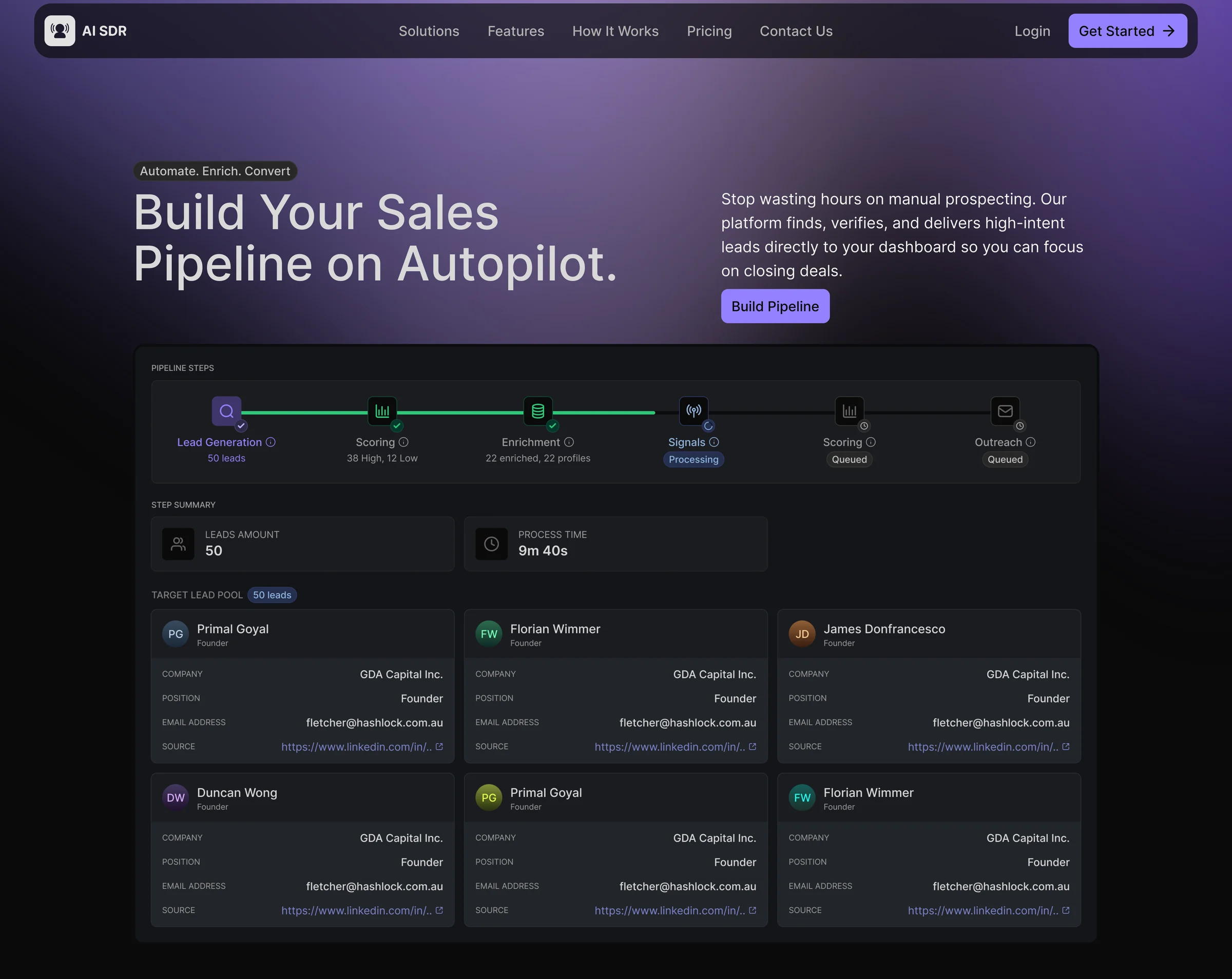
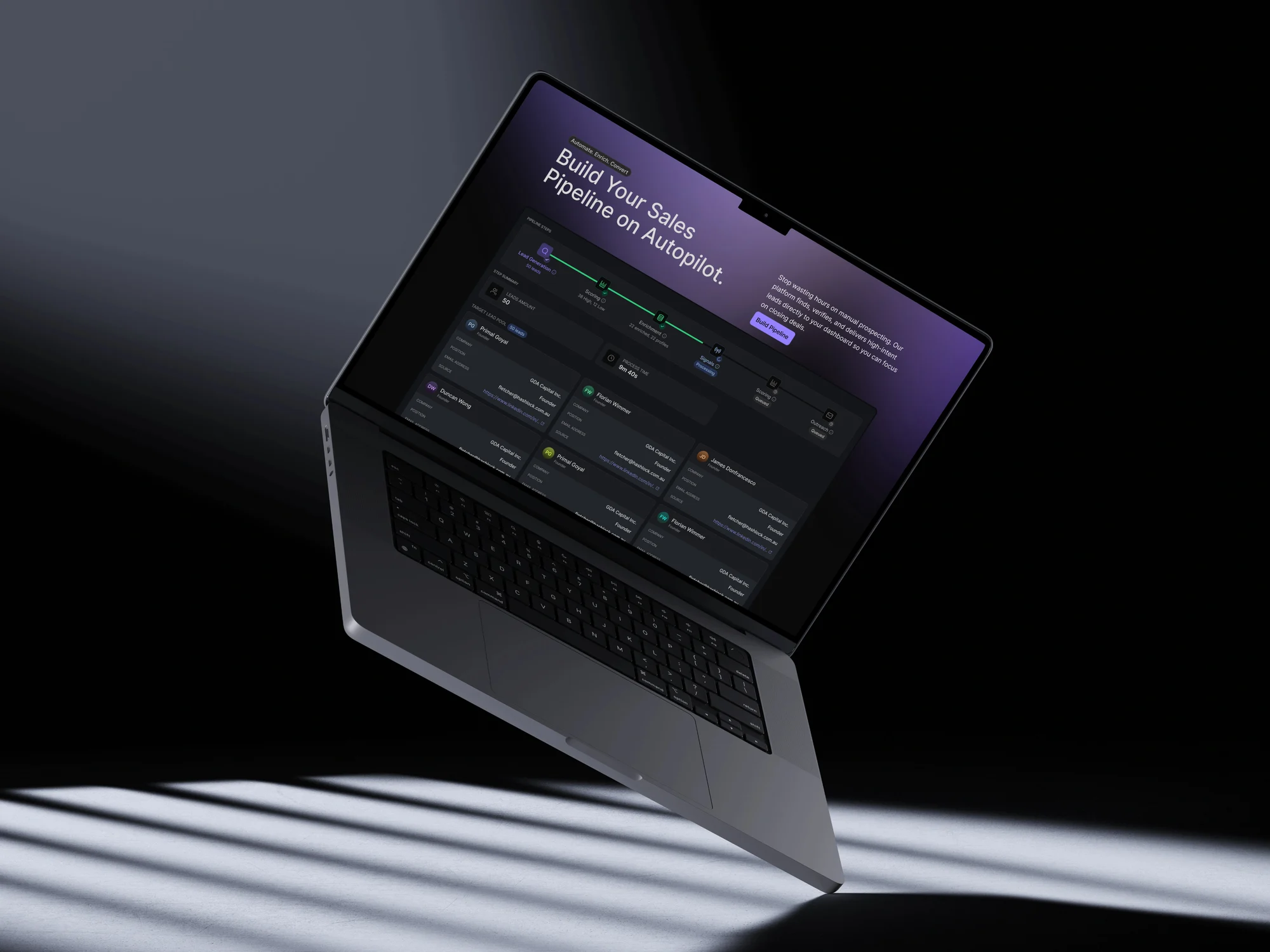
AI SDR is a B2B SaaS platform: it finds leads, shows the signals behind each match and drafts an opener from them.
My task was to design the product from zero, landing page and web app, and run the project with the development team.
I designed the landing page and a web app for three roles, working next to the back-end developer. The design system covers tokens, light and dark themes and developer docs.
Super Admin runs all companies, Company Admin sets up teams, Sales reps work the leads.
Shared docs with the back-end developer, so design and code moved in parallel.
Color, type and spacing tokens, light and dark themes, developer docs.
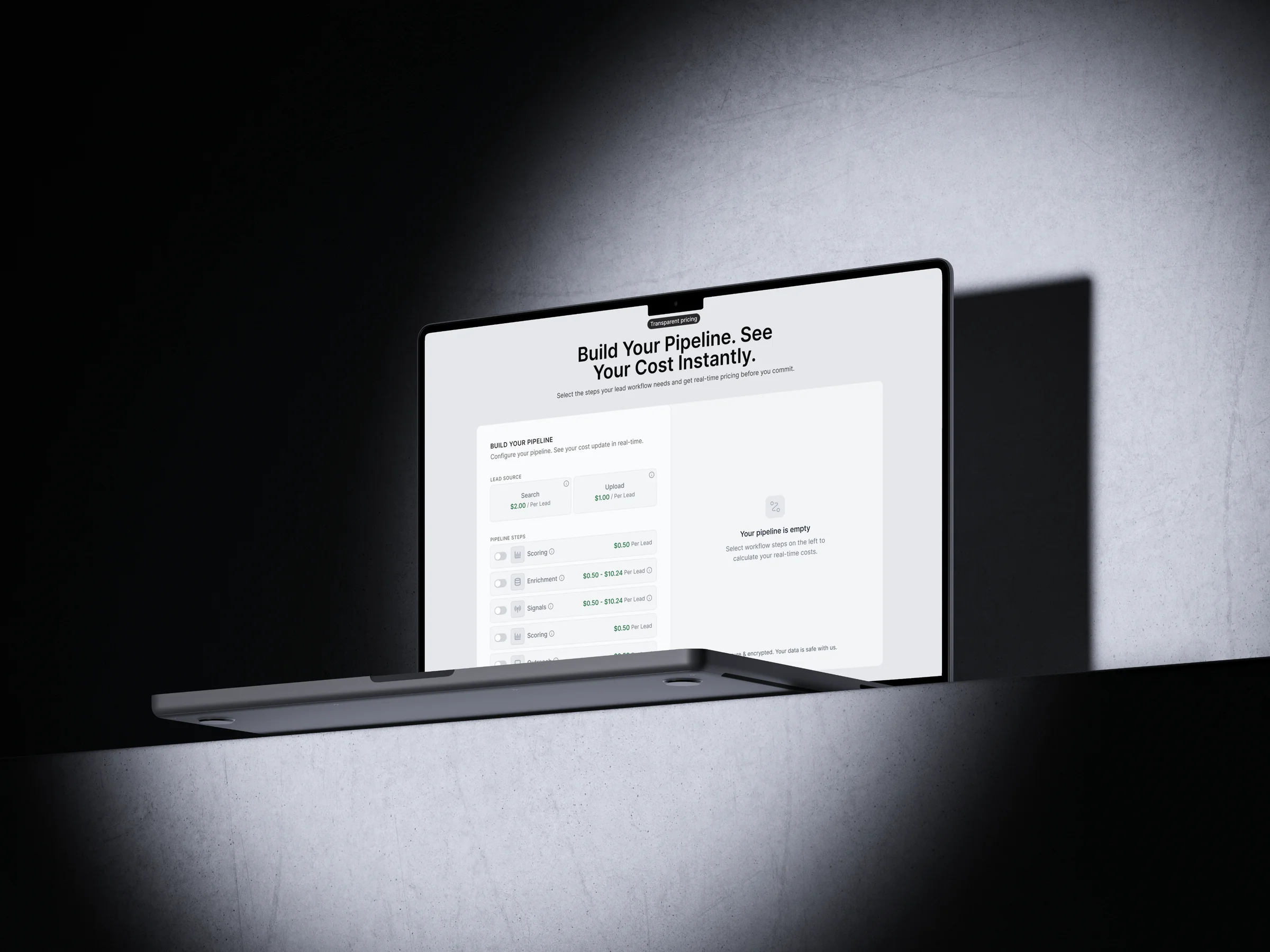
Users build their own flow for finding and working with leads from modular steps: search, scoring, enrichment, signals and outreach. Every step has its price, so the calculator shows the exact cost before launch. No subscription: users pay for the work they order, nothing more.
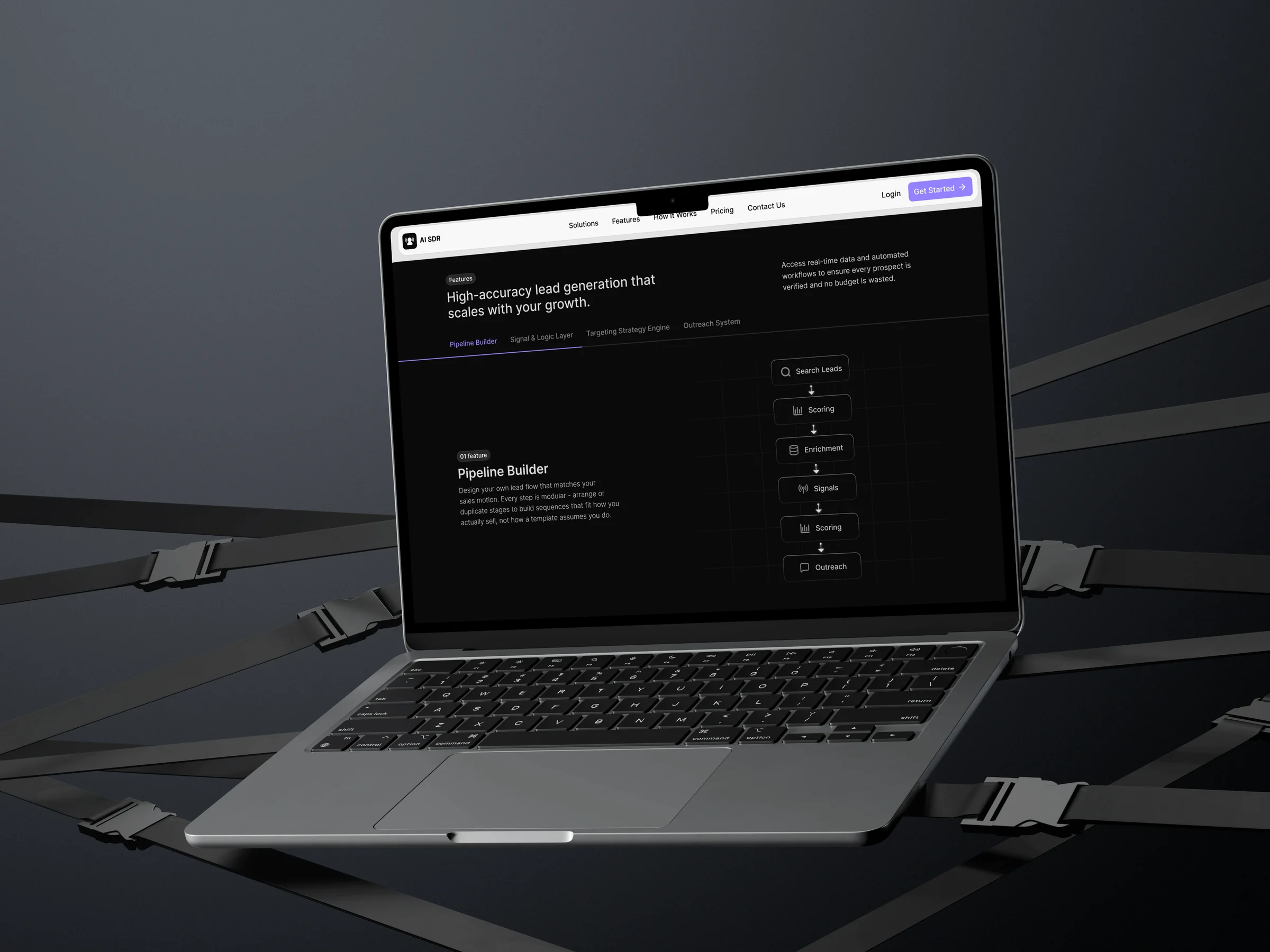
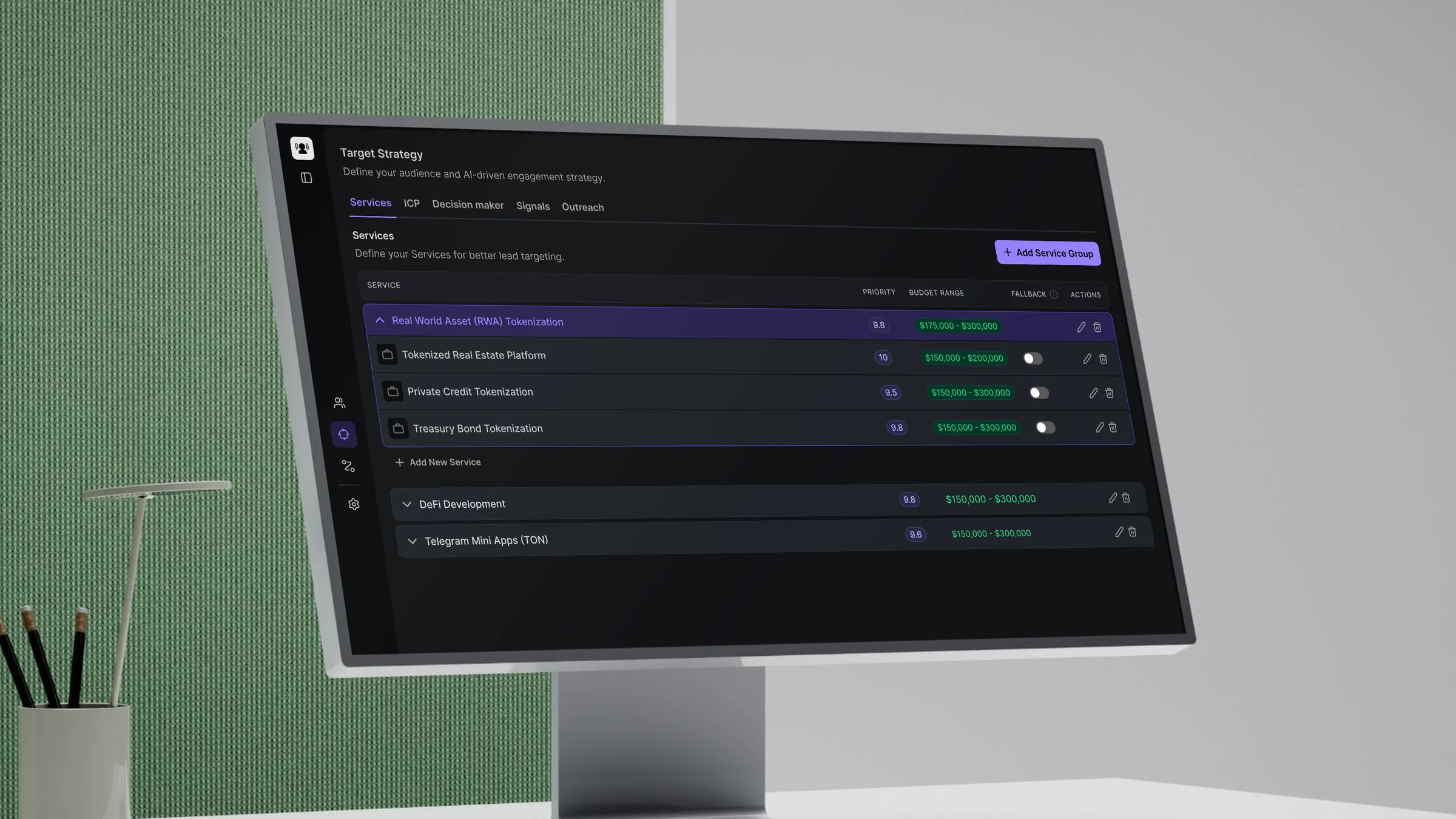
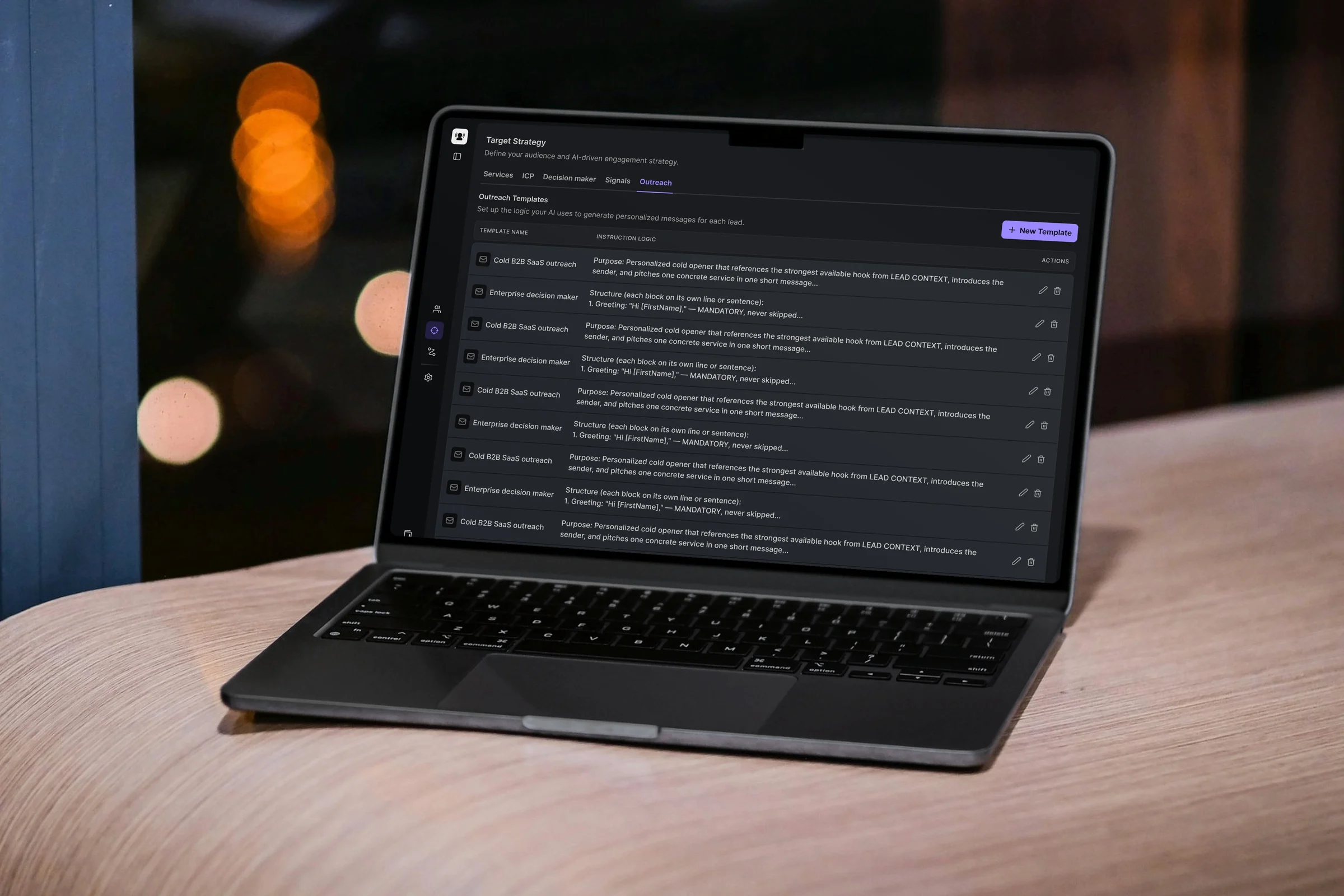
A company sets up what it sells and how the AI should write. Services carry a priority and a budget range. Outreach templates tell the AI which strategy and tone to use in each message. ICP (ideal customer profile), decision maker and signals tabs are part of the same setup and stay closed here under NDA.
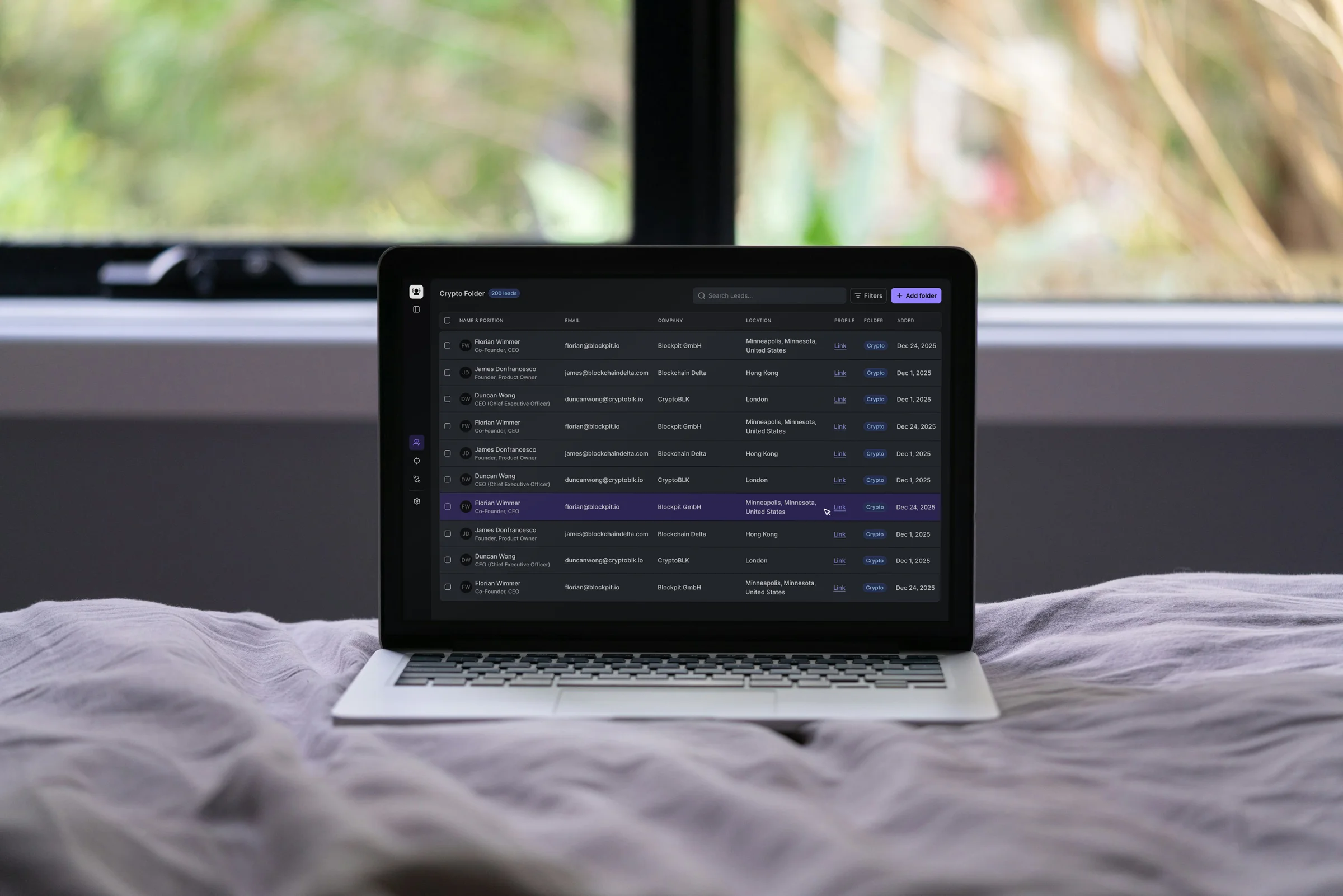
Found leads are saved to folders in one database and reused in as many pipelines as needed. When data gets old, enrichment pulls the current details for any lead.
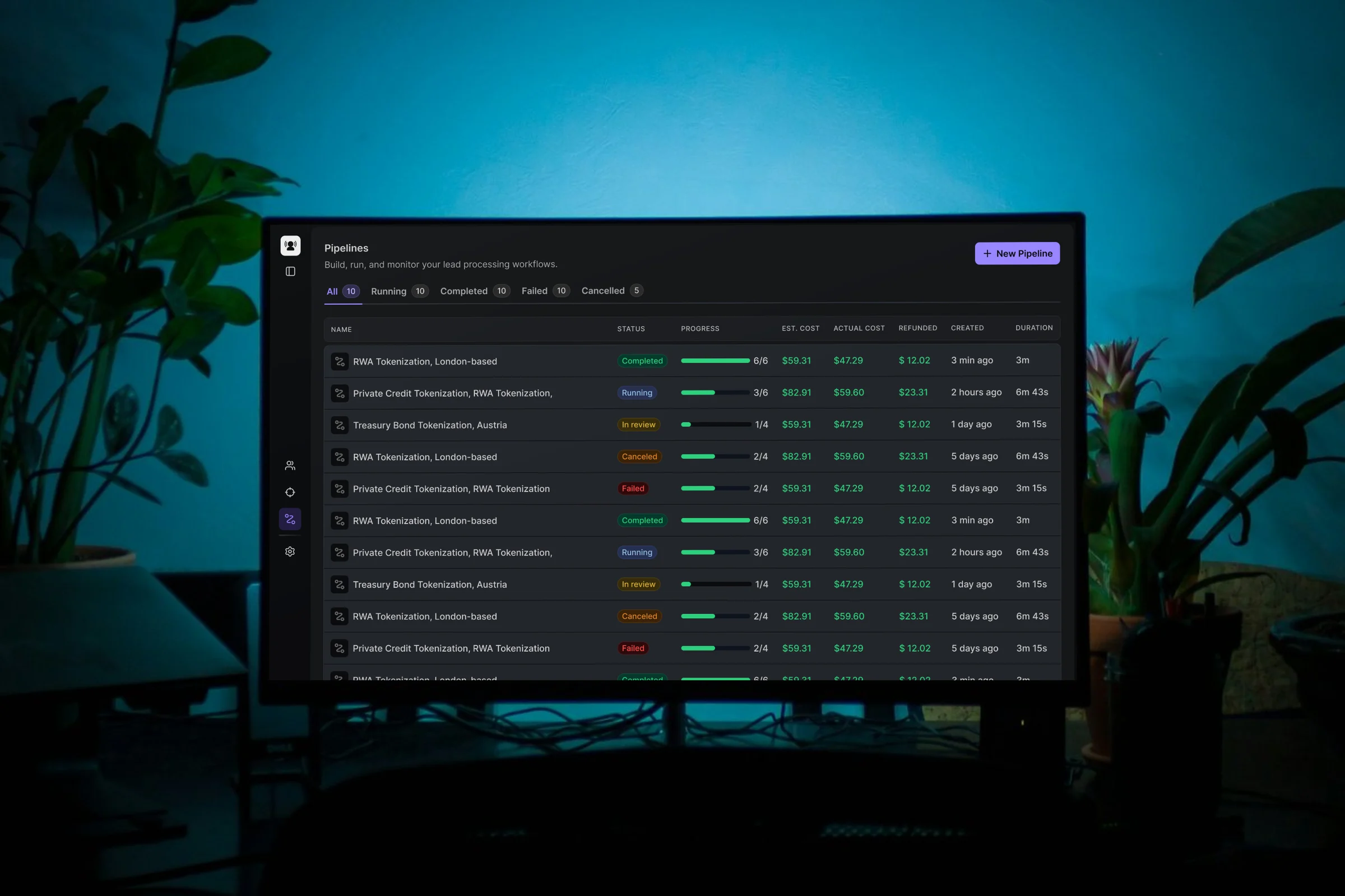
Each search runs as a pipeline. The list shows status, progress, estimated and actual cost, refunds and duration, so the team sees what is running and what it costs.
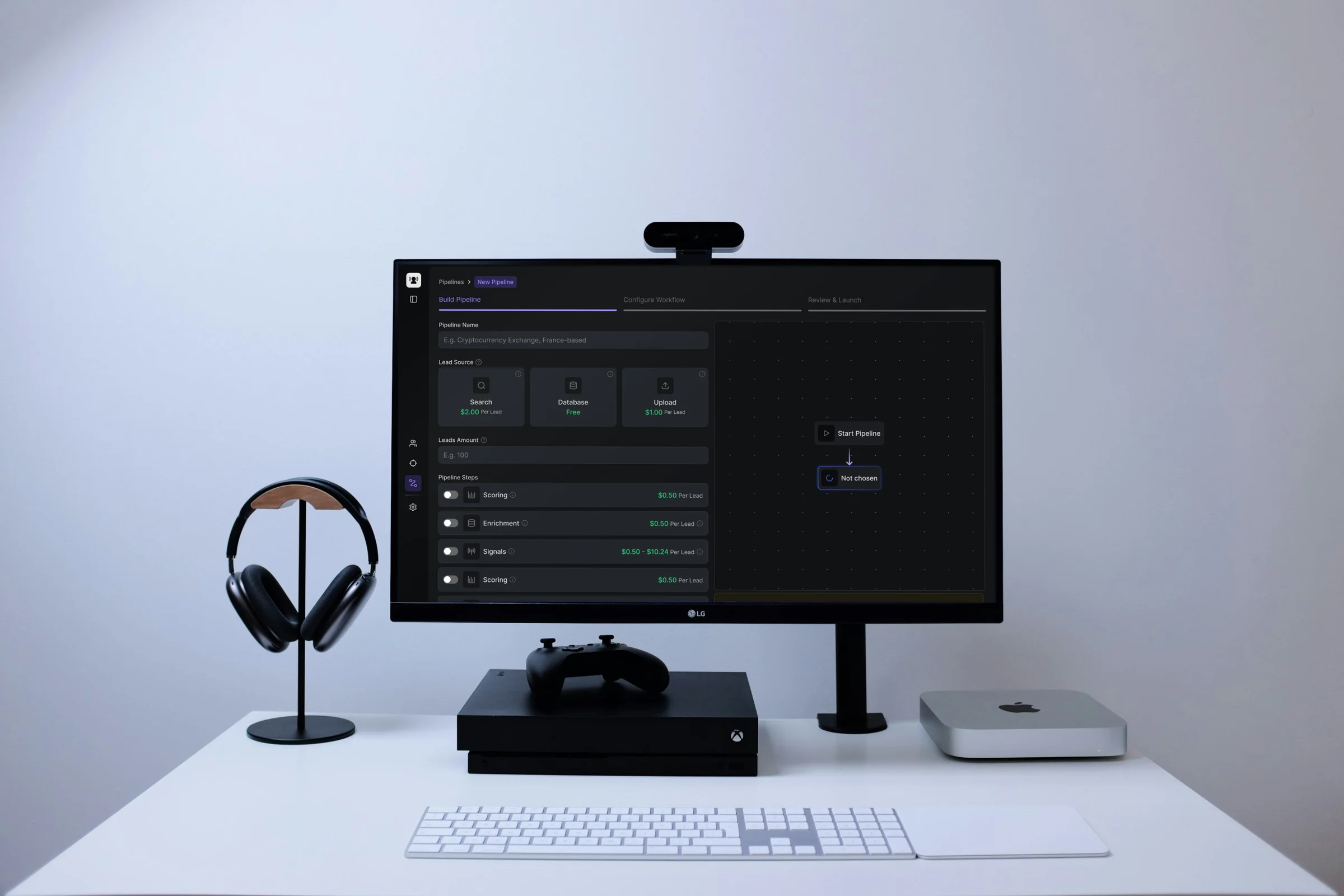
Step one: name, lead source and lead amount, then the steps to run: scoring, enrichment, signals and outreach. The estimate updates with every toggle. A finished setup can be saved as a template, so the same pipeline is not rebuilt from scratch next time.
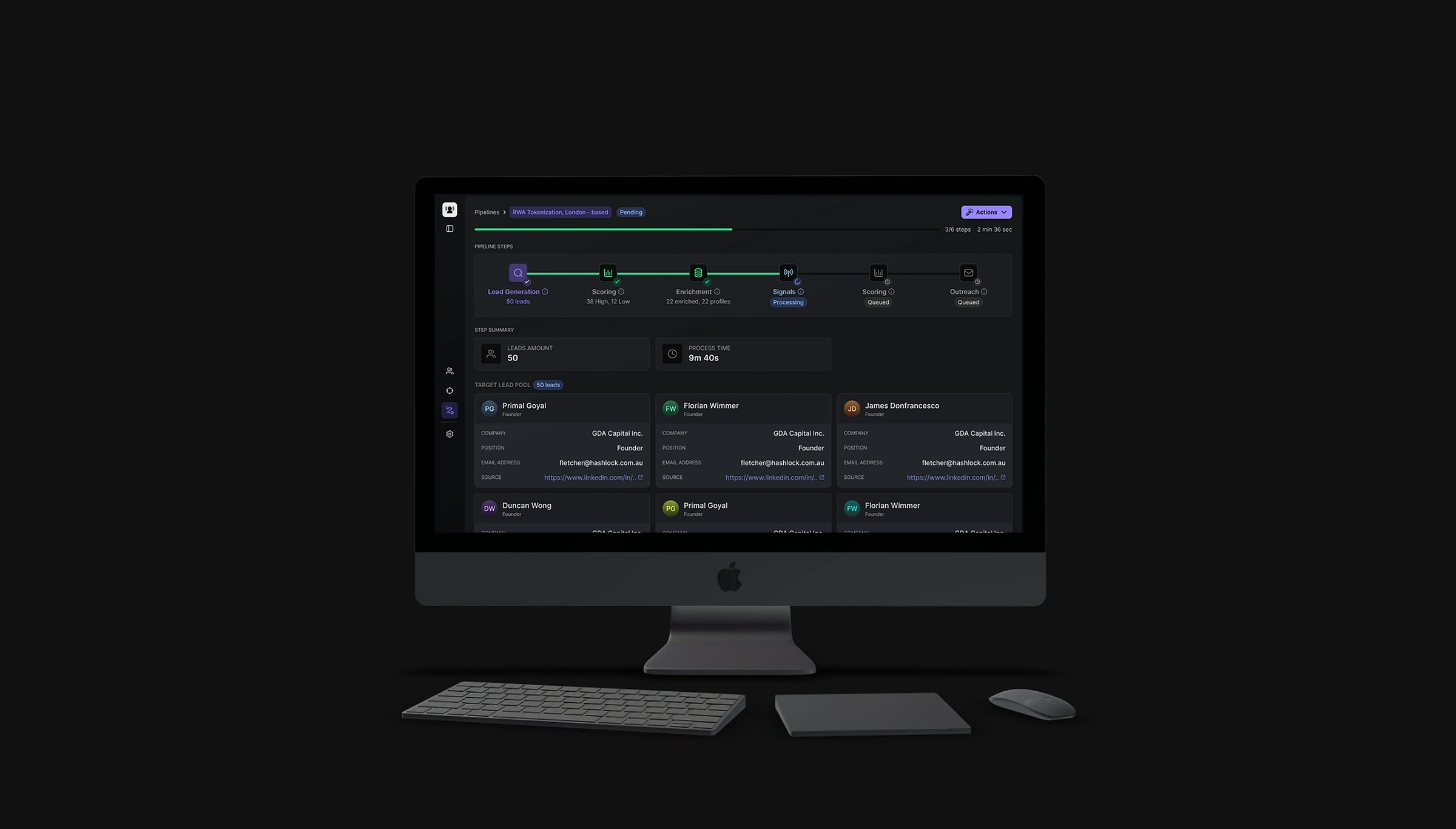
Inside a running pipeline, every step reports its result: 50 leads found, 38 high and 12 low after scoring, 22 enriched. The lead pool below fills in as the search runs.
3 admins and 5 sales reps used the product. Their feedback drove three major updates:
Sales pick a saved strategy instead of writing it every time.
New leads start from a ready pipeline, not a blank one.
Cleaner reading order and more space between cards.
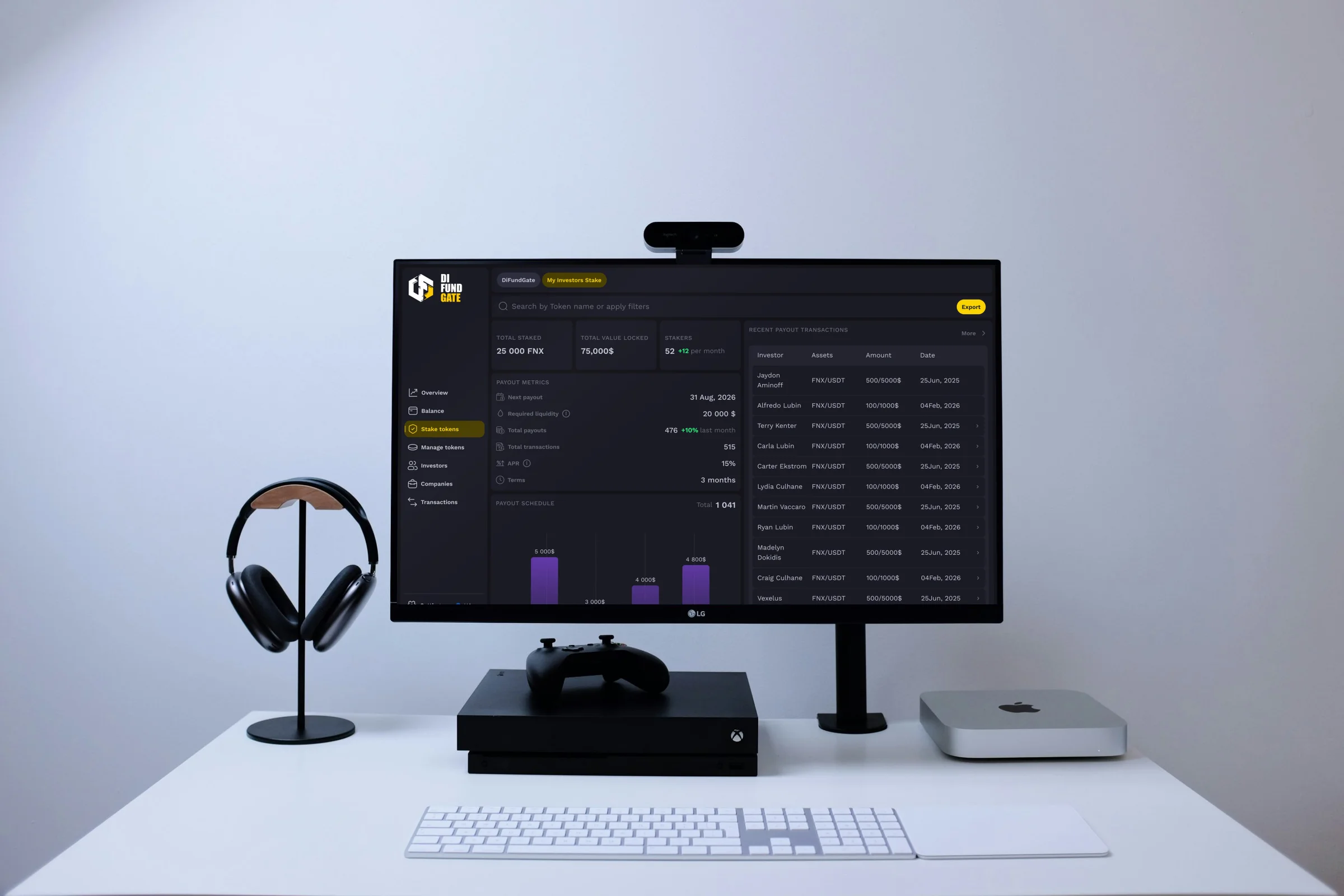
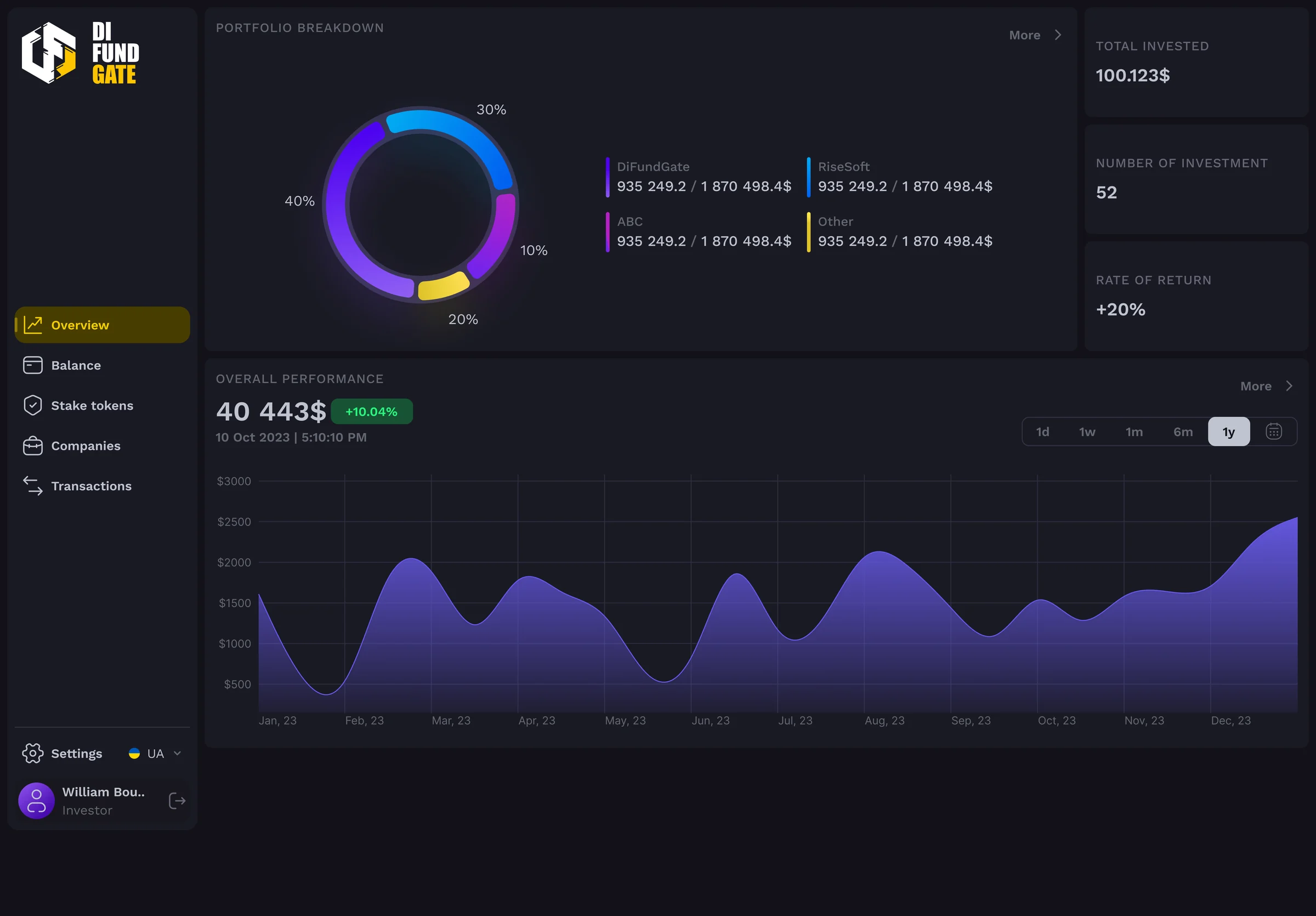
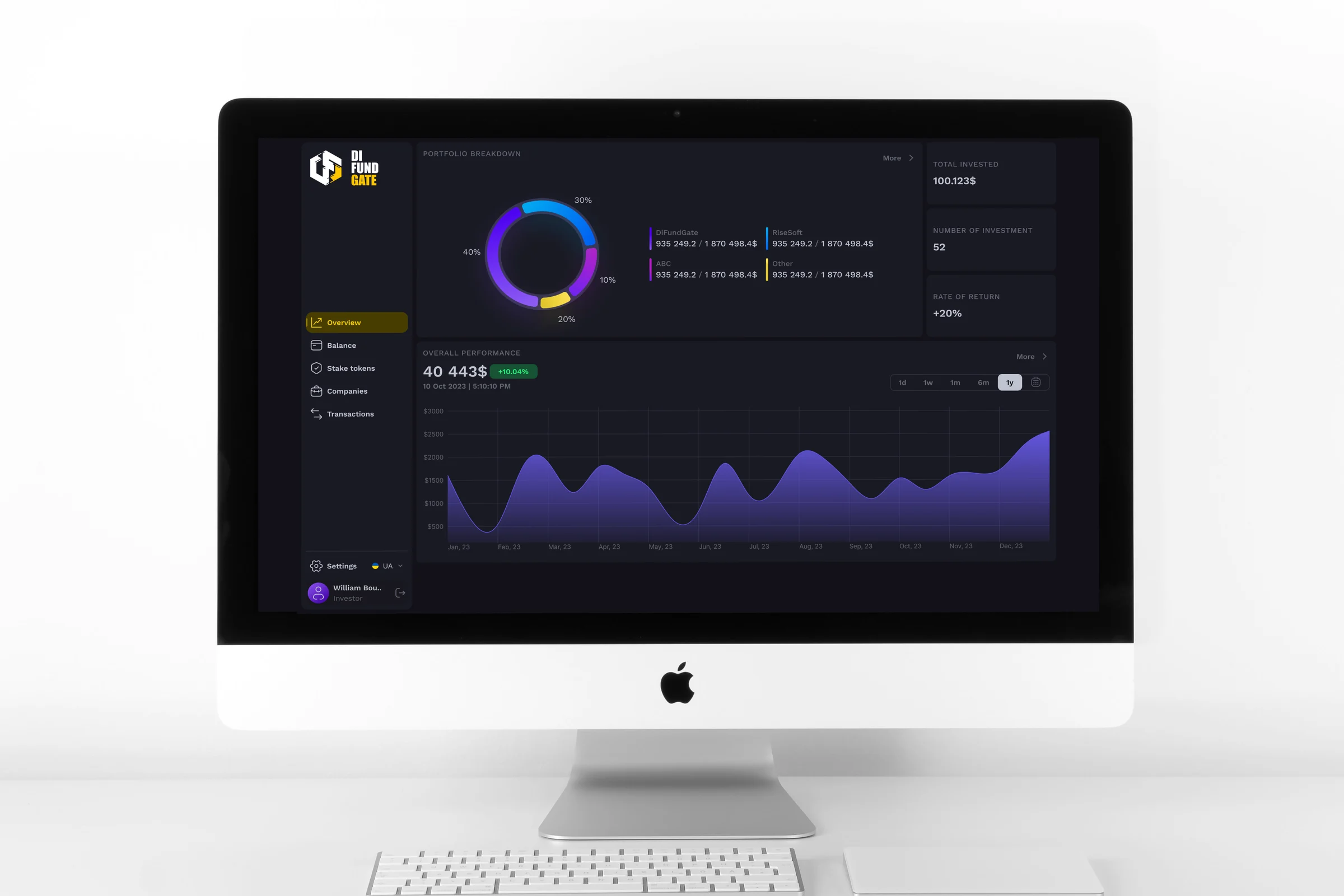
DiFundGate lets property developers raise capital by turning each property into its own token.
My task was to work out the logic first: user flows, prototypes and the panels each of the four roles needs. Then I built the design system and the UI. During development and after launch I also worked as PM with the developers.
I researched the market, mapped flows for every role and built a design system. After launch I added an AI assistant, a guided tour and a new staking panel.
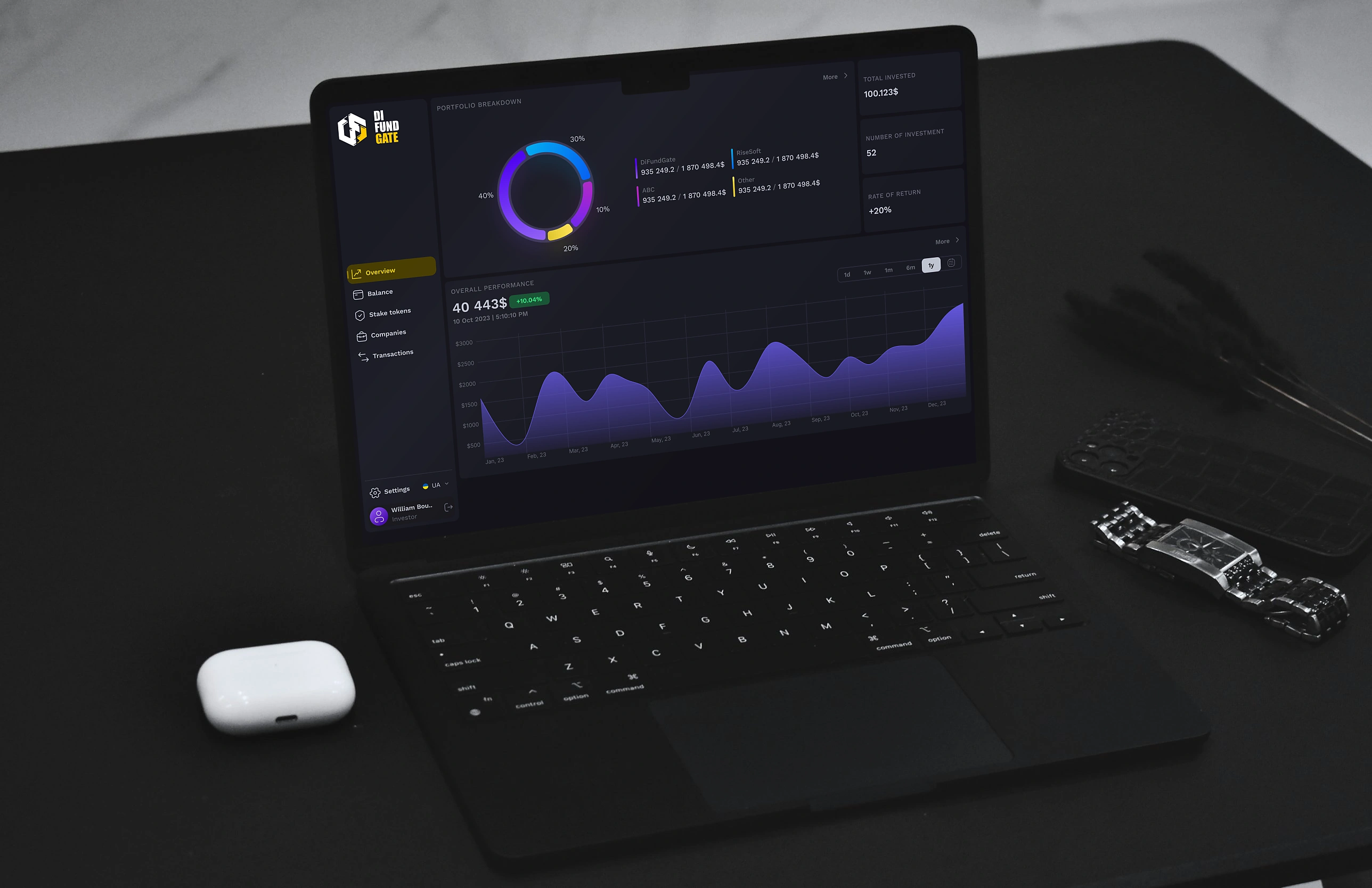
Market and competitor research, then user flows for every role.
Tokens for color, type and spacing; a component library for faster development.
Dashboards for 4 roles, KYC/KYB (identity and business checks) moderation and 3 token creation flows.
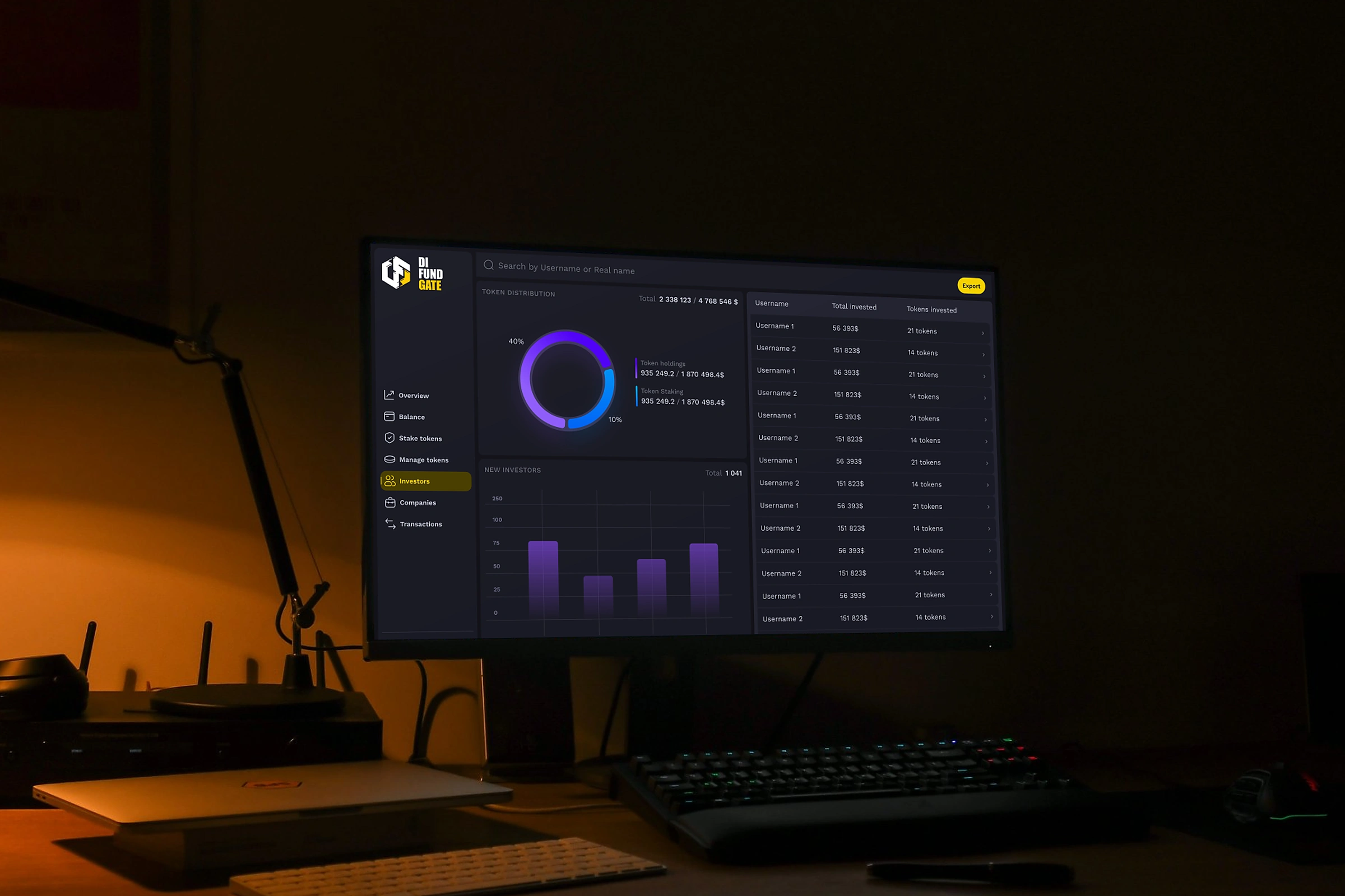
Companies track their investors, token distribution and new investors per week in one view.
Everything an investor checks before buying in, on one page: who the developer is, whether it is verified, how much has been raised and which properties are open for investment. The profile builds trust before the first purchase.
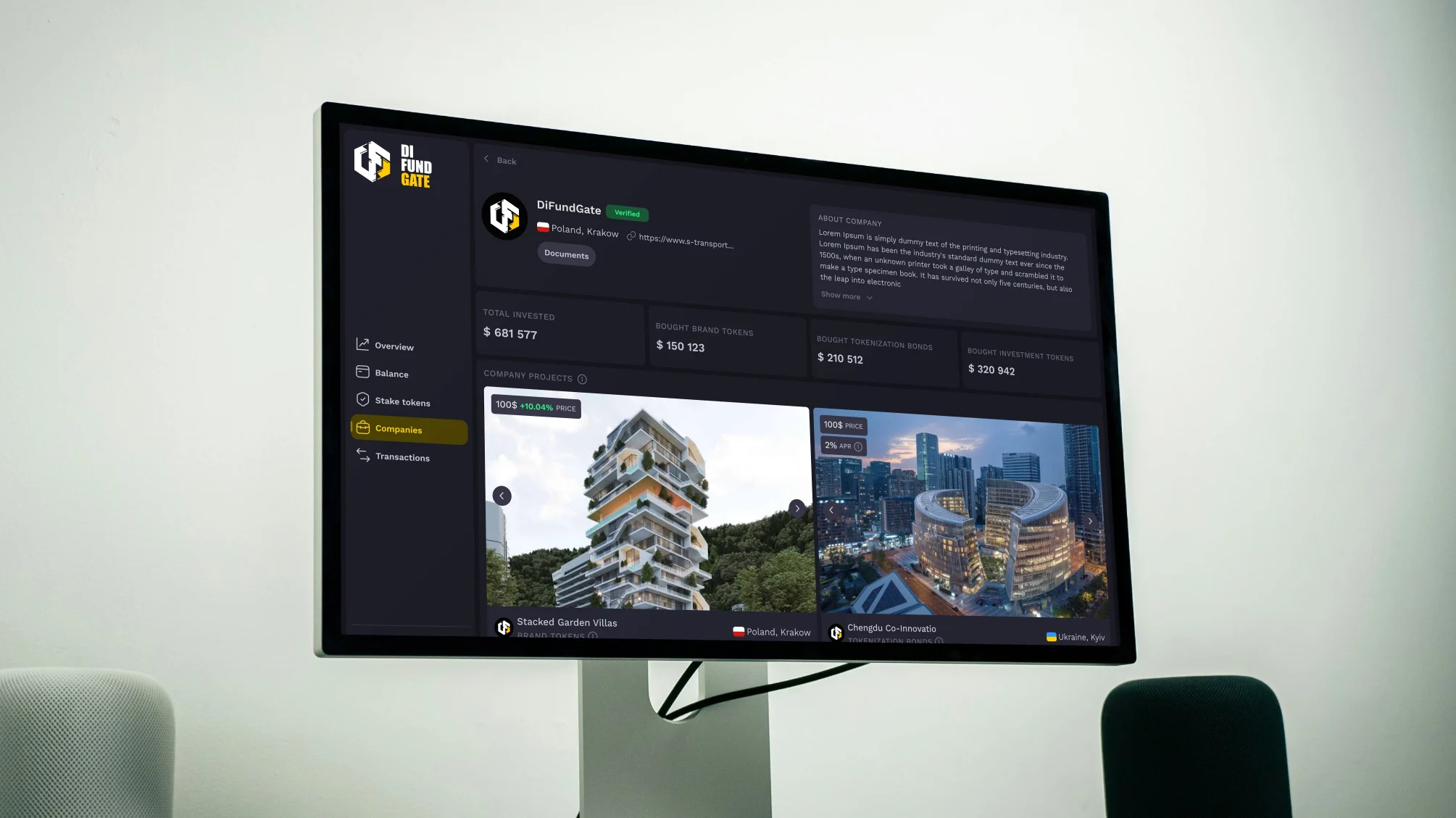
Verified status, location, website and documents.
Investment totals split by token type.
Each tokenized project with price, APR (annual return), token type and city.
A photo carousel for every property.
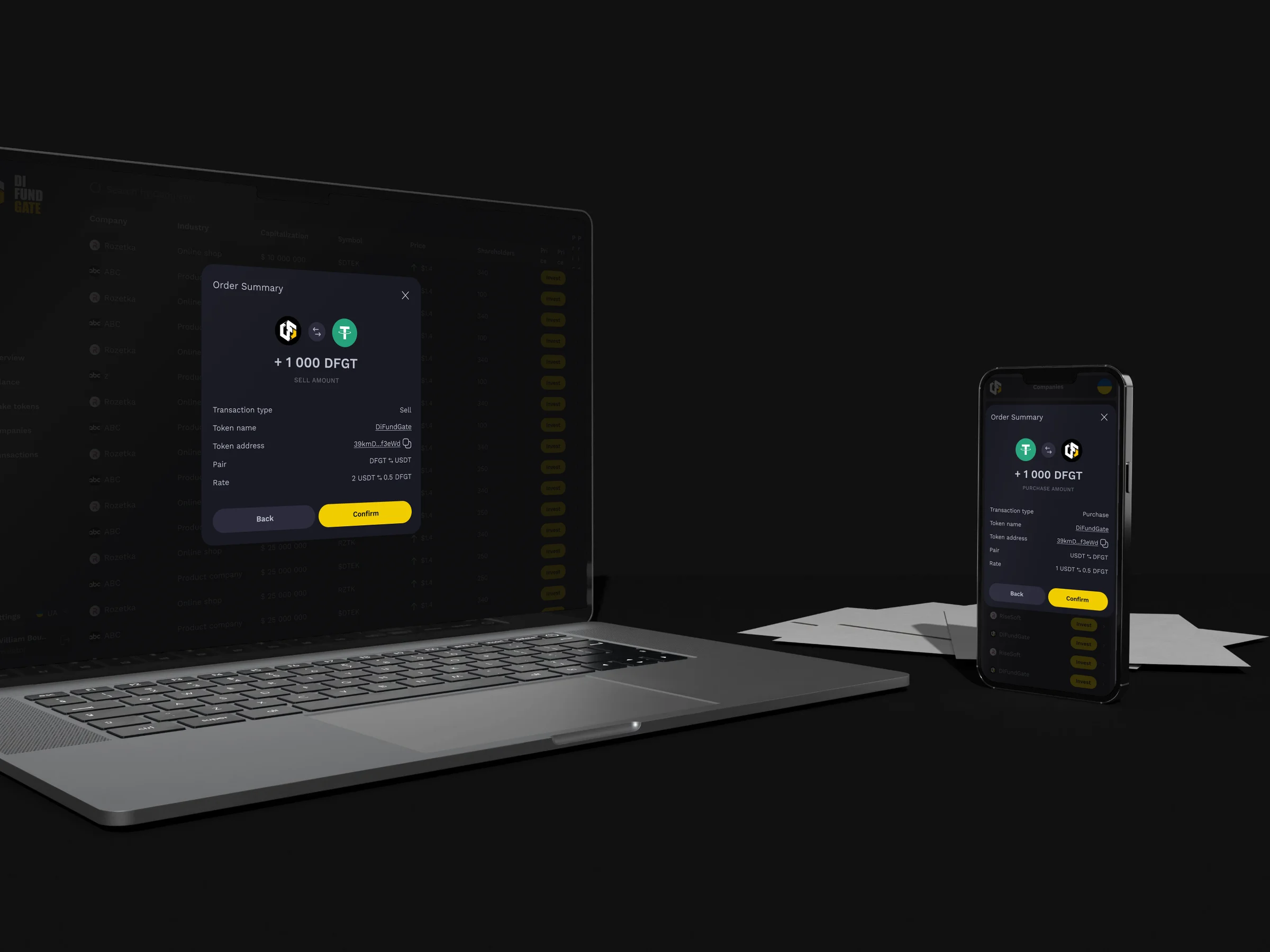
One order summary for every transaction type. Buy and sell show the pair and rate; stake shows the accrual rate and staking period. One confirm step for all three.
Payout metrics, schedule, staking curve and liquidity gap, so companies know when payouts are due. Also added an AI assistant and a guided tour.